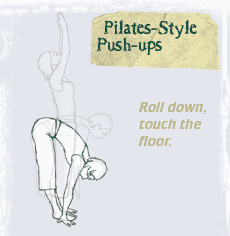
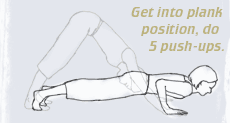
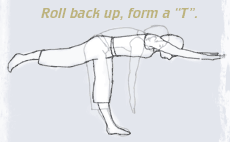
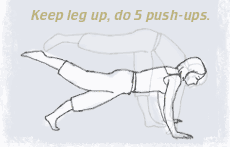
How to climb better without climbing For pure rock climbers—those who think ice should come in small cubes—the world takes a wrong turn some time in late November. You basked in the tactile pleasures of quartzite, granite and sandstone, and all was good. Now you’re looking at a vertical hockey rink. While you’re waiting for the crags to thaw, make sure your climbing skills don’t follow the thermometer’s downward course. Sure you could get comfy on the same well-worn indoor routes and bring on boredom and repetitive-motion injury, but here’s a better idea: challenge yourself with something new and unfamiliar. Maybe even awkwardly unfamiliar. Despite a certain unavoidable degree of repetition, life is about trying new stuff. So while you’re waiting for the world to rotate back toward the sun, explore a few body-bending exercises and learn some fresh takes on classic moves. You can languish at last year’s level, or you can grow as a climber and a person and make real gains in the off-season. Read on, and let a couple of climbing-fitness experts show you how to get better on rock without going outdoors. GOAL ONE: Build body balance. What’s the number-one way to prevent injury and get mightier in the off-season? Work the muscle groups that climbing overlooks. This doesn’t mean building gigantic quads and hamstrings (extra mass where you don’t need it is just more weight to haul up the rocks); it means carefully training opposing muscles so that no one group puts stress on another. Climber and Pilates instructor Lauri Stricker, who specializes in training outdoor athletes, puts it this way: “When you’re climbing, your muscles are playing tug-of-war. The more climbing you do, the more muscle-balancing exercise you need to do.” As anyone who’s ever injured a rotator cuff or elbow knows, the upper body joints are areas of particular concern. Try these three exercises to keep them in working order over the long term. - Pilates-style push-ups. Stand with your arms over your head, then roll your upper body down and touch the floor. Walk your hands out away from your body until you end up in a raised push-up or “plank” position. Do five push-ups, walk back to standing with your legs straight, and roll your upper body back up. Now extend your arms over your head again, kick one leg back and hinge from the waist so that your raised leg and back are parallel to the floor (your body will look like a T). Walk out to the push up position again, keeping your back leg raised. Now do five single leg push-ups. Repeat from the beginning, with the other leg raised. These are great for strengthening your chest, shoulders, and abdominal muscles in new ways. The enhanced torso power will give you extra options on the rocks.
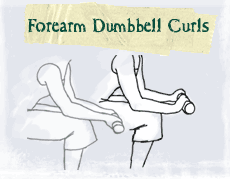
- Forearm dumbbell curls. Sit on a bench, holding a ten- to twenty-pound dumbbell in each hand, palms down (start at ten and increase the weight as your strength increases). Rest your elbows on your knees and slowly flex your wrists, raising your knuckles toward the ceiling. Do three sets of ten. This will work the muscles and tendons on the backsides of your forearms, which will help prevent the elbow injuries that can afflict dedicated climbers.
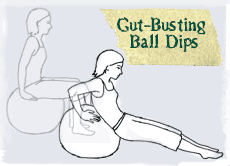
- Gut-busting Swiss-ball dips. Working your tricep muscles balances out the bicep strength you’ve built up from climbing. This twist on classic dips will also build core-stabilizing muscles, which will improve your body tension on steep overhangs and tiny features. Start by sitting on an inflatable Swiss exercise ball, palms on the ball, fingertips pointed forward and just touching your hips. Without moving your hands, scoot your butt off the ball and walk your feet away until your legs are straight (but don’t lock your knees). Keeping your abs taut to stabilize the ball, lower your body toward the floor as you would for a regular dip until your arms form a 90-degree angle. Then come back up to the starting position. Do three sets of ten. The challenge is keeping the ball steady as you lower and raise yourself. It will wiggle around until you master the exercise. You’ll really feel this in your arms and stomach, and, if you stick with the program, you’ll notice the difference when you climb.
Story by Megan Miller Goal Two: Improve agility >>>... More indoor tips on toning >>>. |