|  | ||||||||||||
| | | |||||||||||
| The season never ends for the certifiable Ben Moody refuses to hang up his wheels at first frost. The Whites around Plymouth, New Hampshire, are piled high with fresh snow dump, and the brittle, flesh-biting cold infiltrates anything not carefully sealed and heated. Ben’s buddies, encased in goose down, are buying lift tickets. Ben’s kitted out for a ride. For him, it’s not a bad thing that deep winter bikers constitute a very exclusive club. “I crank it as much in winter as summer,” Ben says. He’s a 29-year-old pro racer who grinds up the local singletrack and snowmobile trails while fair-weather cyclists are taking spinbike sweatbaths at the gym or letting themselves pack on a little extra insulation. Moody’s winter schedule does demand a special brand of fortitude. “You don’t run into many group rides out there, and it can be tough when it’s negative three with a headwind off the mountains and you’re just stepping out of the warmth.” On the other side of the toughness, of course, lies the payoff.
“It doesn’t sound like fun, but it’s actually habit forming,” Ben says. “I can stay out four or five hours, just lose myself in the ride. It’s a one-of-a-kind sensation. Alone in the woods at night, you can definitely spook yourself.” When you’re negotiating frozen rain over rock-hard dirt, there’s a heavy price for failure. The crash factor is always front and center, and on group rides a Darwinian element can seep in. In the frigid air, forward momentum is crucial: If you’re not fast enough, you’re not asked back. The rewards for getting it right, however, are commensurate with the pain and suffering. Studded tires grip the earth in one giant Velcro interface, and the frictionless surface offers a turbo boost. Because a bad wreck in sub-freezing conditions carries the hazard of exposure, concentration and control are everything. A light touch on the brakes is always in order. “Most people don’t think riding up or down an ice flow is a good idea, but the studded tires let you go pretty much anywhere. You need to accept that you can go down without warning, though,” says Ben Silberfarb, a long-time racer and recent convert from winter road riding. “You power through the mountains in winter and you get real strong.” Is winter mountain biking heading toward the mainstream? Not any time soon. But pockets of winter bikers lurk in the valleys and hillsides where snow comes early and stays late, and their numbers are growing. Story by Chris Milliman More about how to ride in winter >>>
| ||||||||||||
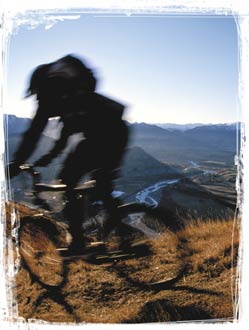 Moody is part of a quiet revolution made up of riders who don’t let the habitual seasonal offering of snow and ice and the threat of frostbite knock them out of the saddle. Their faces are obscured by balaclavas; their helmet vents are duct-taped shut. On frigid rock outcrops, you can find their carbide-studded tracks. Sometimes Ben rides into the winter night, when the terrain hardens up and turns optimum.